Everest Base Camp vs Annapurna Base Camp: Which Trek Is Right for You?
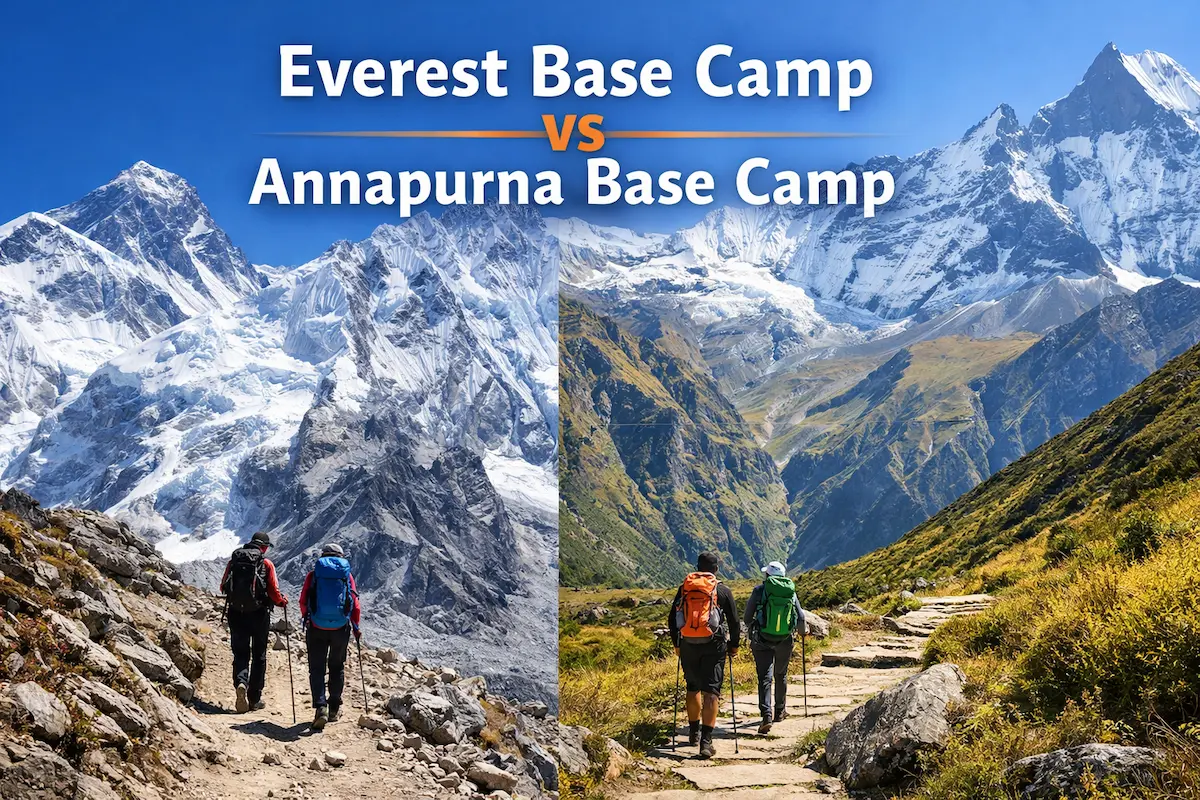
Everest Base Camp vs Annapurna Base Camp isn’t about which trek is “better” — it’s about which one fits your time, altitude comfort, and the kind of Himalayan experience you actually want.
For many travellers considering a Himalayan journey, the decision often comes down to two iconic routes: Everest Base Camp and Annapurna Base Camp. Both promise dramatic mountain scenery, meaningful cultural encounters, and the deep satisfaction that comes from walking through high-altitude landscapes. Yet despite their shared reputation, these treks offer distinctly different experiences in pace, terrain, altitude, and atmosphere.
Comparisons between the two can feel overwhelming. One is associated with the world’s highest peak and a legendary mountaineering heritage. The other leads into a natural mountain sanctuary surrounded by towering Annapurna giants. Both appear on bucket lists, both are achievable for prepared trekkers, and both are supported by well-established tea house networks. The question is not which trek is better — it is which trek is better for you.
Understanding the differences between Everest Base Camp vs Annapurna Base Camp helps clarify what each journey demands and what it rewards. Factors such as time available, comfort preferences, altitude tolerance, crowd levels, and the kind of landscapes you want to walk through all shape the experience far more than reputation alone.
This guide compares the two routes in practical terms, explaining how they feel day to day and who they suit best. With the right expectations and a trek aligned to your priorities, either journey can become an extraordinary introduction to trekking in Nepal.
Overview: Two Iconic Treks, Two Very Different Journeys
At first glance, Everest Base Camp and Annapurna Base Camp appear to promise a similar reward: walking deep into the Himalaya toward some of the most famous mountains on Earth. Both routes are supported by established tea house networks, guided by experienced local teams, and achievable for trekkers who prepare sensibly. Yet the character of each journey differs in ways that shape how the experience feels day to day.
The Everest Base Camp trek unfolds in the Khumbu region of northeastern Nepal, home to Sherpa communities and the mountaineering legacy surrounding the world’s highest peak. The journey follows a high-altitude valley system carved by glaciers, with suspension bridges, dramatic ridgelines, and wide alpine landscapes. The scale feels vast and exposed, and the environment becomes progressively more rugged as elevation increases. The presence of Everest itself is subtle at first, revealing itself gradually rather than dominating the skyline from the beginning.
Nepal’s most popular trekking regions are supported by infrastructure and conservation initiatives overseen by the Nepal Tourism Board, which promotes sustainable tourism throughout the country.
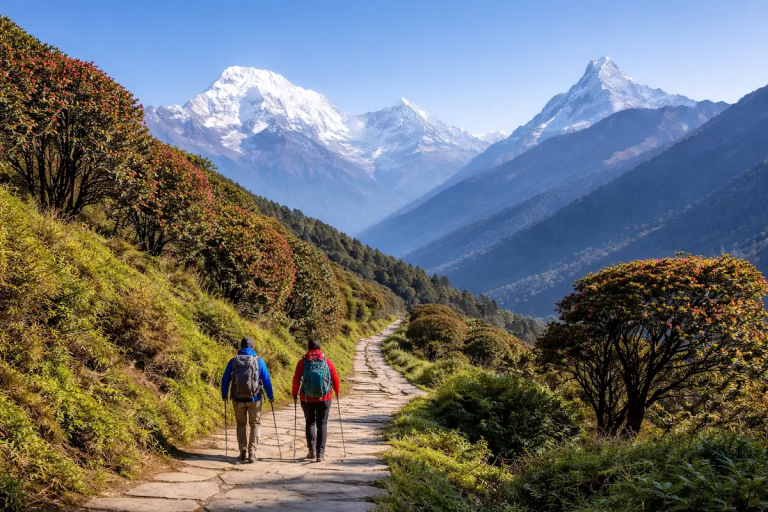
By contrast, the Annapurna Base Camp trek leads into the Annapurna Sanctuary in central Nepal, a natural amphitheatre surrounded by towering peaks. The journey passes through terraced farmland, bamboo forests, and rhododendron woodlands before entering a high mountain bowl encircled by snow-covered giants. Rather than a long alpine valley, the experience feels enclosed and intimate, with mountains rising steeply in every direction.
The rhythm of travel also differs. Everest Base Camp typically involves longer days at higher elevation, with gradual acclimatisation shaping the itinerary. Annapurna Base Camp generally gains altitude more quickly but tops out lower, allowing for a shorter overall journey while still delivering a dramatic high-mountain setting.
Cultural encounters vary along the routes as well. In the Khumbu, Sherpa heritage, Buddhist monasteries, and prayer flags reflect a long mountaineering and trading history linked to Tibet. Along the Annapurna route, Gurung and Magar villages offer a different cultural landscape shaped by agriculture, terraced hillsides, and traditional mountain livelihoods.
Understanding these contrasts helps clarify that the Everest Base Camp vs Annapurna Base Camp decision is not about choosing the more famous trek, but about selecting the journey that aligns with your time, comfort expectations, and the kind of mountain experience you hope to have.
Trek Duration and Time Commitment
One of the most practical differences between these two routes is the time required to complete them comfortably. While both are achievable for prepared trekkers, the Everest Base Camp vs Annapurna Base Camp decision often begins with how many days you can realistically dedicate to the journey.
A typical Everest Base Camp itinerary requires 12 to 14 days on the trail, not including international travel. This timeframe allows for gradual altitude gain and includes scheduled acclimatisation days in places such as Namche Bazaar and Dingboche. These rest days are not optional luxuries; they are essential for helping the body adapt safely to increasing elevation. The route also requires flights to and from Lukla, which can introduce additional buffer days in case of weather delays.
By comparison, the Annapurna Base Camp trek is usually completed in 7 to 10 days, depending on pacing and starting point. Because the maximum altitude is lower, fewer acclimatisation days are required, and access from Pokhara is straightforward by road. This makes the trek easier to fit within tighter travel schedules while still providing a high-altitude mountain experience.
Time commitment is not only about total days but also about daily rhythm and recovery. Everest Base Camp involves extended periods above 3,500 metres, where slower movement and extra rest are necessary. Annapurna Base Camp gains altitude more quickly but allows the body to recover at lower elevations during portions of the route.
Travel logistics further influence scheduling. Reaching Lukla for the Everest trek involves short mountain flights that are weather dependent, requiring flexibility. Annapurna Base Camp begins with a drive from Pokhara, making access more predictable and reducing the likelihood of unexpected delays.
For travellers balancing limited holiday time, family commitments, or onward travel plans, these differences can be decisive. Those with a flexible schedule may welcome the longer immersion and acclimatisation rhythm of Everest Base Camp. Others may prefer the efficiency and accessibility of Annapurna Base Camp while still experiencing dramatic Himalayan scenery.
Understanding the time commitment helps ensure the journey feels immersive rather than rushed. Well-paced itineraries allow the body to adapt, the landscape to unfold gradually, and the experience to settle into a rhythm that feels sustainable rather than hurried.
For a deeper understanding of how pacing shapes the trekking experience, see How to Plan a Himalayan Trek Without Rushing the Experience.
Difficulty and Physical Demands
When comparing Everest Base Camp vs Annapurna Base Camp, difficulty is often the first concern. Neither trek requires technical climbing skills, but both demand steady effort over multiple days in mountainous terrain. The challenge lies less in athletic performance and more in endurance, altitude, and the ability to maintain a sustainable pace.
Everest Base Camp is physically demanding primarily because of altitude and cumulative fatigue. Trekkers spend several days above 3,500 metres and eventually reach 5,364 metres at base camp. At these elevations, the body receives less oxygen, making movement slower and exertion feel more intense. Even gentle inclines can feel strenuous, and simple tasks such as dressing or climbing lodge stairs may require extra effort. The itinerary includes acclimatisation days to support adaptation, but the overall experience remains physically taxing due to sustained time at high altitude.
The Annapurna Base Camp trek presents a different type of challenge. The maximum altitude is lower, but the terrain includes long stone staircases, steep ascents, and frequent elevation changes. Many trekkers find the continuous climbing and descending more demanding on the legs than expected. Unlike Everest Base Camp, where gradients are often gradual, Annapurna’s trail can involve extended stair sections that require steady effort and knee resilience, particularly on the descent.
Daily walking time for both treks typically ranges from 4 to 7 hours, broken into manageable segments with rest stops. Guides set a pace designed for endurance rather than speed, and moving slowly is essential for conserving energy. The goal is to arrive in the afternoon with enough strength to eat, rest, and recover — not to finish the day exhausted.
Load management also affects perceived difficulty. Most trekkers carry only a light daypack while porters transport heavier bags. This significantly reduces physical strain and allows for more comfortable movement on steep terrain. Without this support, even moderate gradients can feel far more demanding.
Mental endurance plays a role as well. Trekking involves repetition: wake early, walk, eat, walk, rest, repeat. Muscles may feel sore, mornings can be cold, and altitude may disrupt sleep. The experience becomes easier when trekkers accept the rhythm rather than resist it. Consistency matters more than strength.
For many people, Everest Base Camp feels more demanding due to altitude exposure and the extended time spent high above sea level. Annapurna Base Camp often feels more physically strenuous on the legs but less taxing on breathing and acclimatisation. Neither route is “easy,” yet both are achievable for ordinary travellers who prepare sensibly and respect the pace of mountain travel.
For a clear explanation of how elevation affects effort and recovery, see Altitude Sickness Explained Simply for First-Time Trekkers.
Altitude and Acclimatisation Differences
Altitude is one of the most significant factors separating these two journeys. While both treks reach high mountain environments, the elevation gained and the time spent adapting to thinner air shape how each experience feels physically and mentally.
The Everest Base Camp trek reaches approximately 5,364 metres, placing trekkers well into high-altitude territory where oxygen levels are substantially reduced. Above 3,000 metres, the body begins adapting to lower oxygen availability, and above 4,000 metres the effects become more noticeable. Breathing feels heavier during exertion, sleep can become lighter, and maintaining a slow, steady pace becomes essential. Because of this, Everest Base Camp itineraries include planned acclimatisation days in villages such as Namche Bazaar and Dingboche. These pauses allow the body to adjust gradually and reduce the risk of altitude-related illness.
By contrast, the Annapurna Base Camp trek tops out at approximately 4,130 metres. While this elevation is still high enough to require caution and awareness, most trekkers find the physiological strain less intense than on the Everest route. The itinerary typically includes steady elevation gain without the need for multiple acclimatisation days, and many people experience fewer altitude-related symptoms when moving at an appropriate pace.
The difference is not only about the highest point reached, but about how long you remain at altitude. Everest Base Camp involves extended periods above 3,500 metres, meaning the body must function in thinner air for several consecutive days. Annapurna Base Camp allows more time at lower elevations before entering the sanctuary, and trekkers descend sooner after reaching the high point, reducing prolonged exposure.
Acclimatisation is a gradual physiological process rather than a matter of fitness or determination. The body adjusts by increasing breathing rate, improving oxygen delivery, and enhancing cellular efficiency. This adaptation requires time, hydration, nutrition, and appropriate pacing. Ascending too quickly can overwhelm these adjustments, increasing the likelihood of headaches, fatigue, nausea, or more serious symptoms.
It is also important to recognise that altitude affects individuals differently. Age, fitness level, and trekking experience do not guarantee immunity. A slow pace, adequate hydration, and clear communication with your guide remain the most effective safeguards.
Many trekkers notice that once acclimatisation begins to take effect, breathing stabilises and walking feels more manageable. The effort does not disappear, but it becomes predictable. This sense of adjustment often marks a turning point in the journey, when the body settles into the rhythm of movement at elevation.
Understanding these differences helps clarify the Everest Base Camp vs Annapurna Base Camp decision. Those curious about high-altitude environments and comfortable with a slower adaptation process may find Everest Base Camp especially rewarding. Those seeking dramatic Himalayan scenery with less altitude strain may prefer Annapurna Base Camp.
For a deeper understanding of how the body adapts to elevation and how to recognise warning signs, see Altitude Sickness Explained Simply for First-Time Trekkers.
Scenery and Landscape Experience
One of the most compelling differences between these routes lies in how the landscape unfolds. While both journeys deliver extraordinary Himalayan scenery, the visual experience of Everest Base Camp vs Annapurna Base Camp differs in scale, diversity, and the way the mountains reveal themselves over time.
The Everest Base Camp trek is defined by vast alpine scale. After leaving the lower valleys, the landscape opens into wide glacial corridors framed by towering peaks. The environment feels rugged and expansive, shaped by ice, rock, and high-altitude winds. As elevation increases, vegetation thins and the terrain becomes increasingly stark, reinforcing the sense of entering a high mountain world. Iconic peaks such as Ama Dablam, Nuptse, and Lhotse dominate the skyline, while Everest itself appears gradually rather than immediately, often revealed from specific viewpoints rather than towering overhead throughout the journey.
The Annapurna Base Camp trek offers a striking contrast through its variety and intimacy. The route begins among terraced farmland and subtropical vegetation before climbing through bamboo forests and rhododendron woodlands. Seasonal changes bring vibrant colour in spring and lush greenery after the monsoon. As the trail rises, the landscape narrows into a glacial valley that opens suddenly into the Annapurna Sanctuary — a natural amphitheatre surrounded by steep, snow-covered peaks. Here, mountains rise dramatically on all sides, creating a sense of enclosure and proximity that differs from the wide-open scale of the Khumbu.
Light and atmosphere shape each experience differently. In the Everest region, the high altitude and dry air often produce exceptionally clear skies, especially in autumn, allowing distant peaks to appear sharply defined. In the Annapurna region, morning light filtering through forested valleys gives way to dramatic high-altitude views as the sanctuary is reached, creating a sense of progression through distinct ecological zones.
Water features also influence the journey. Everest Base Camp follows glacial rivers fed by snowmelt, with turquoise streams and suspension bridges spanning deep gorges. Annapurna Base Camp includes waterfalls, terraced irrigation channels, and river valleys that feel more verdant and dynamic in lower sections.
Neither landscape is superior; they simply evoke different emotional responses. Everest Base Camp emphasises scale, exposure, and the raw presence of the high Himalaya. Annapurna Base Camp offers contrast, diversity, and the dramatic reveal of a mountain sanctuary.
Understanding these differences helps travellers imagine not only the destination, but the unfolding experience along the way — an important factor when deciding which journey will feel most meaningful.
Culture, Villages, and Trail Atmosphere
Beyond the mountains themselves, trekking in Nepal is shaped by the communities that live along the trails. The Everest Base Camp vs Annapurna Base Camp experience differs not only in landscape but also in culture, village life, and the atmosphere created by the people who call these regions home.
The Everest Base Camp trek passes through the Khumbu region, homeland of the Sherpa people, whose history is closely tied to Himalayan trade routes and mountaineering expeditions. Villages such as Namche Bazaar serve as vibrant cultural and logistical hubs, where traditional stone houses sit alongside bakeries, trekking lodges, and small markets. Prayer wheels spin along village paths, mani stones line the trails, and monasteries perched above settlements reflect a strong Tibetan Buddhist heritage. The presence of mountaineering history is tangible, with memorials and climbing stories woven into the region’s identity.
In contrast, the Annapurna Base Camp trek moves through Gurung and Magar communities whose livelihoods are rooted in agriculture and hillside farming. Terraced fields, livestock, and traditional stone homes define the lower sections of the trail. Daily life unfolds at a slower pace, shaped by seasonal harvests and village routines rather than expedition traffic. As trekkers ascend, the cultural landscape transitions gradually, reflecting the varied ethnic groups that inhabit the Annapurna region.
The atmosphere along the trails also differs. In the Khumbu, the international popularity of the Everest route creates a cosmopolitan trekking environment. You may encounter climbers preparing for expeditions, experienced trekkers returning to the region, and guides sharing stories from past seasons. Despite the global presence, the rhythm of mountain life remains grounded in local customs and spiritual traditions.
Along the Annapurna route, the atmosphere often feels more rural and intimate. Villages are closely integrated into the landscape, and interactions with lodge owners and families can feel informal and personal. The trail’s progression from farmland to high sanctuary creates a sense of journey not only through altitude, but through ways of life shaped by terrain and climate.
Both routes encourage respectful interaction. A simple “Namaste,” walking clockwise around mani stones, and asking permission before photographing individuals reflect awareness and appreciation for local customs. Small gestures of respect are noticed and often returned with warmth.
While the scenery draws trekkers to the Himalaya, it is the combination of mountain culture, spiritual presence, and everyday village life that gives each route its distinct atmosphere. Understanding these cultural differences helps travellers choose the journey that resonates most with the experience they hope to have.
Crowds, Trail Traffic, and Atmosphere
Trail traffic is one of the most noticeable differences between these two journeys, and for some travellers it plays a decisive role in the Everest Base Camp vs Annapurna Base Camp decision. Both routes are popular, but the scale, flow of trekkers, and overall atmosphere can feel quite different.
The Everest Base Camp trek is one of the most famous walking routes in the world, attracting trekkers, climbers, and expedition teams from across the globe. During peak seasons — particularly October–November and March–April — trails can be busy, especially near major villages such as Namche Bazaar and on approach routes to base camp. Teahouses fill quickly, and dining rooms may feel lively in the evenings. For some travellers, this creates a shared sense of adventure and a vibrant international atmosphere. For others seeking solitude, the popularity can feel less peaceful.
Despite the traffic, the route rarely feels crowded in the way urban environments do. Groups spread out naturally along the trail, and long stretches of quiet walking remain common. Early morning departures and steady pacing often allow trekkers to experience solitude even during peak season.
The Annapurna Base Camp trek is also well-travelled, particularly in autumn and spring, but the flow of trekkers tends to feel more dispersed. While sections near popular villages can be busy, the trail generally offers a quieter rhythm, especially outside peak hours. The atmosphere often feels calmer and more reflective, with fewer expedition teams and less high-altitude mountaineering traffic.
Seasonal timing strongly influences crowd levels. Peak months provide the most stable weather and clear views, which naturally attracts more trekkers. Shoulder periods such as late November or early March can offer a balance between favourable conditions and thinner crowds. Winter brings even quieter trails, though colder temperatures and occasional snow require proper preparation.
It is also worth noting that perception of crowds varies with expectation. Some trekkers enjoy the sense of shared purpose and the opportunity to meet people from around the world. Others value solitude and the meditative rhythm of quieter trails. Neither experience is inherently better; they simply suit different preferences.
For travellers who prioritise quieter trekking environments, timing and route selection matter as much as destination. Understanding how seasonal flow affects trail atmosphere can help align expectations with the experience you hope to have.
If avoiding busy routes is important to you, see If You Hate Crowds, Avoid These Routes.
Comfort, Tea Houses, and Facilities
Accommodation on both routes is based on Nepal’s well-established tea house system — simple mountain lodges that provide meals, shelter, and a warm place to gather after a day on the trail. While Everest Base Camp vs Annapurna Base Camp offer similar lodging structures, the level of comfort, variety, and facilities can differ due to altitude, accessibility, and regional development.
On the Everest Base Camp trek, tea houses in lower villages such as Phakding and Namche Bazaar often provide a wide range of comforts, including bakeries, hot showers, charging stations, and Wi-Fi. As elevation increases, facilities become more basic. Rooms typically contain twin beds, mattresses, blankets, and a small table. Heating is usually limited to the communal dining room, where trekkers gather around a central stove fueled by wood or yak dung. Hot showers and charging services are often available for a fee, though availability may vary with altitude and weather.
Along the Annapurna Base Camp route, tea houses are similarly simple but can feel slightly more varied due to easier road access in lower regions. Many lodges offer hot showers, electricity, and charging facilities at lower elevations. As you ascend toward the sanctuary, amenities become more limited, and the experience becomes closer to that of high mountain lodging. Rooms remain basic, with twin beds and shared bathrooms, but the dining room continues to serve as the social and physical heart of the lodge.
Food availability is comparable on both treks. Menus typically include dal bhat, noodles, soups, rice dishes, eggs, pancakes, and simple breads. The higher you go, the more menus rely on non-perishable ingredients transported by porters or pack animals. Meals remain warm, filling, and designed to support energy needs at altitude.
Connectivity varies. Everest’s popularity has led to wider availability of Wi-Fi and mobile coverage in some villages, though connections can be slow and weather dependent. On the Annapurna route, connectivity is available in many lower villages but becomes less reliable higher on the trail. Many trekkers find that reduced connectivity becomes part of the experience rather than an inconvenience.
Comfort on these treks is best understood in context. Rooms are not luxurious, and amenities are limited compared to urban accommodation. Yet after hours of walking, removing boots, sitting beside a warm stove, and sharing a hot meal often feel more satisfying than modern comforts. Sleep tends to come easily, and the routine of early evenings and quiet lodges supports recovery.
Understanding what tea houses provide — and what they do not — helps align expectations with reality. Both routes offer safe, welcoming lodging that supports the rhythm of trekking life. The experience is defined less by luxury and more by warmth, routine, and the sense of shelter within the mountain environment.
Which Trek Is Better for Beginners?
For many first-time trekkers, choosing between Everest Base Camp vs Annapurna Base Camp comes down to one central question: which route offers the best introduction to trekking in Nepal? Both journeys are achievable for beginners with sensible preparation, but the experience each provides can feel quite different.
Annapurna Base Camp is often considered the more accessible first trek. The overall duration is shorter, the maximum altitude is lower, and access from Pokhara is straightforward by road. The route passes through varied landscapes — farmland, forest, and high mountain terrain — allowing trekkers to adjust gradually to the rhythm of daily walking. Because the highest point sits just above 4,000 metres, many people experience less physiological strain compared to higher-altitude routes. For travellers with limited time or uncertainty about how their body will respond to elevation, Annapurna Base Camp can feel like a manageable and rewarding introduction.
That said, Everest Base Camp is far from unattainable for beginners. With proper pacing, acclimatisation days, and a well-structured itinerary, many first-time trekkers complete the journey successfully each season. The trail is well established, tea houses are reliable, and experienced guides help manage altitude adaptation. The primary challenge is not technical difficulty but the sustained time spent at high elevation. Trekkers must be prepared to move slowly, stay hydrated, and respect the body’s need to adjust.
Fitness requirements for both treks are moderate rather than extreme. The ability to walk for several hours per day, handle sustained uphill sections, and maintain consistency over multiple days is more important than speed or strength. Training hikes, stair climbing, and building general endurance before arrival can make the experience more comfortable.
Mindset plays an equally important role. Beginners often expect to feel strong every day, but trekking involves fatigue, cold mornings, and occasional discomfort. Accepting the rhythm of the trail — slow progress, regular rest, and early evenings — makes the journey far more enjoyable.
Choosing between the two routes depends less on ability and more on priorities. Those seeking a shorter, varied introduction to Himalayan trekking often find Annapurna Base Camp ideal. Those drawn to the legendary status of Everest and curious about high-altitude environments may prefer Everest Base Camp, provided they are willing to respect a slower pace.
For a deeper look at selecting a route that matches your experience level, see Best First Trek in Nepal for Beginners.
Who Should Choose Everest Base Camp?
The Everest Base Camp trek appeals to travellers drawn to the scale, legacy, and high-altitude environment of the world’s most famous mountain region. While it is achievable for first-time trekkers with proper preparation, the journey rewards those who are comfortable with slower pacing, sustained elevation, and a longer commitment on the trail.
This trek is especially well suited to travellers who are motivated by iconic destinations. Walking through the Khumbu region, passing beneath peaks such as Ama Dablam and Lhotse, and standing in the shadow of Everest itself carries a symbolic weight that resonates long after the journey ends. For many, the experience represents a lifelong goal rather than simply a scenic trek.
Everest Base Camp is also ideal for those curious about high-altitude environments. Spending multiple days above 3,500 metres allows trekkers to experience how the body adapts to thinner air and how movement, breathing, and pacing change with elevation. The itinerary’s acclimatisation rhythm encourages patience and awareness, making the journey as much about adaptation as distance.
Travellers who enjoy a lively international trekking atmosphere often appreciate the Khumbu trail. The route attracts people from around the world, creating opportunities for conversation and shared experiences in tea house dining rooms each evening. At the same time, long stretches of quiet walking allow for solitude and reflection.
The trek suits those who can commit additional time to travel and acclimatisation. Weather-dependent flights to Lukla require flexibility, and the extended duration allows the landscape and altitude to unfold gradually. Trekkers who prefer immersive journeys rather than quick itineraries often find this pacing especially rewarding.
Everest Base Camp may be the right choice if you:
- are inspired by the legacy of Everest and Himalayan mountaineering
- are comfortable moving slowly at high altitude
- want a longer, immersive mountain journey
- enjoy meeting trekkers from around the world
- are curious about life in the high Himalaya
For those drawn to the scale and symbolism of the world’s highest mountain region, the Everest Base Camp trek offers an experience that extends beyond scenery into history, culture, and personal achievement.
Who Should Choose Annapurna Base Camp?
The Annapurna Base Camp trek appeals to travellers seeking a dramatic Himalayan experience within a shorter timeframe and with slightly less altitude exposure. While the journey still requires steady effort and respect for mountain conditions, it often feels more accessible and varied, making it an excellent choice for those new to multi-day trekking.
This route is particularly well suited to travellers who value landscape diversity. The trail passes through terraced farmland, bamboo forests, and rhododendron woodlands before opening into the Annapurna Sanctuary — a high mountain amphitheatre surrounded by towering peaks. This progression through distinct ecological zones creates a strong sense of journey and contrast, with changing scenery providing visual interest throughout the trek.
Annapurna Base Camp also suits travellers working within tighter schedules. The trek can typically be completed in 7 to 10 days, and access from Pokhara by road reduces the logistical uncertainty associated with mountain flights. For those balancing limited holiday time or combining trekking with other travel in Nepal, this efficiency can make the journey more practical.
Many trekkers appreciate the slightly lower maximum altitude compared with Everest Base Camp. While elevation still requires awareness and steady pacing, the reduced exposure to extreme altitude often feels less physically demanding for those concerned about high-altitude strain.
The trail atmosphere can feel quieter and more rural, particularly outside peak hours. Villages along the route reflect agricultural traditions and everyday mountain life, and interactions with lodge owners and families often feel informal and welcoming. For travellers seeking a reflective journey shaped by varied landscapes and village culture, the Annapurna route offers a strong sense of place.
Annapurna Base Camp may be the right choice if you:
- want dramatic Himalayan scenery within a shorter timeframe
- prefer varied landscapes rather than extended alpine terrain
- are seeking a first high-altitude trekking experience
- value straightforward access and predictable logistics
- appreciate a quieter, more rural trail atmosphere
For travellers who want a complete Himalayan experience that balances accessibility, diversity, and mountain grandeur, the Annapurna Base Camp trek offers a rewarding and memorable journey.
Conclusion: Which Trek Is Right for You?
Choosing between Everest Base Camp vs Annapurna Base Camp is less about selecting the “better” trek and more about identifying which journey aligns with your priorities, timeframe, and comfort with altitude. Both routes offer extraordinary mountain scenery, meaningful cultural encounters, and the deep satisfaction that comes from moving steadily through high Himalayan landscapes.
Everest Base Camp delivers a sense of scale and legacy that few destinations can match. The journey unfolds gradually through high-altitude valleys shaped by glaciers and mountaineering history, offering an immersive experience that rewards patience and adaptation. For travellers drawn to iconic landscapes and the rhythm of life at elevation, the Khumbu region provides a powerful and enduring impression.
Annapurna Base Camp offers a different but equally compelling experience. The progression from farmland and forests into a high mountain sanctuary creates a sense of contrast and intimacy, while the shorter duration and slightly lower altitude make the journey more accessible for many trekkers. Those seeking diversity of scenery, efficient logistics, and a balanced introduction to Himalayan trekking often find the Annapurna route especially satisfying.
Neither trek is defined solely by its highest point or reputation. The experience is shaped by daily rhythm, cultural encounters, changing landscapes, and the gradual clarity that comes from simplifying life to movement, nourishment, rest, and awareness of the environment around you.
With realistic expectations and a well-paced itinerary, ordinary travellers complete both treks every season. The key is choosing the route that matches your goals rather than following reputation alone.
If you’re ready to explore these journeys in more detail, the Everest Base Camp trek offers an iconic high-altitude experience, while the Annapurna Base Camp trek provides a diverse and accessible journey into the heart of the Himalaya.
If you’re unsure which route best suits your timeframe or experience level, you can also reach out via our enquiry page for practical guidance.
FAQ: Everest Base Camp vs Annapurna Base Camp
1) Which is harder: Everest Base Camp or Annapurna Base Camp?
Everest Base Camp usually feels harder due to higher altitude and longer time spent above 3,500m. Annapurna Base Camp can feel tough on the legs because of steep stair sections.
2) Which trek is better for beginners?
Annapurna Base Camp is often the easier first trek because it’s shorter and reaches a lower maximum altitude, but Everest Base Camp is still achievable with proper pacing and acclimatisation.
3) Which trek has better mountain scenery?
Both are spectacular but different. Everest Base Camp offers vast high-alpine landscapes and famous peaks, while Annapurna Base Camp delivers varied landscapes and a dramatic mountain amphitheatre.
4) Which trek has fewer crowds?
Everest Base Camp is generally busier, especially in peak months. Annapurna Base Camp can feel quieter overall, though it is still popular in autumn and spring.
5) Do I need acclimatisation days on both treks?
Everest Base Camp typically includes planned acclimatisation days because the altitude is higher. Annapurna Base Camp is lower, but a steady pace still matters.
6) Which trek is better if I have limited time?
Annapurna Base Camp usually fits tighter schedules (often 7–10 days). Everest Base Camp typically needs more time (often 12–14 days) plus extra buffer for Lukla flights.
7) Which trek has better tea house comfort and facilities?
Both use tea houses, but facilities become more basic as altitude increases. Everest routes can feel more “developed” in key villages, while Annapurna can feel more rural and varied depending on the section.