Best First Trek in Nepal for Beginners
You don’t need to be “fit enough” for the Himalaya — you just need the right first route, the right season, and a pace that lets your body adapt day by day.
For many people, the idea of trekking in Nepal carries a mix of excitement and uncertainty. Snow-covered peaks, remote trails, and stories of high altitude can make the experience feel intimidating before it even begins. In reality, thousands of first-time trekkers complete Himalayan routes every year — not because they are elite athletes, but because they choose routes suited to their comfort level and follow a steady, well-paced approach.
The truth is that the best trek in Nepal for beginners is not defined by distance alone. What matters more is altitude profile, daily walking rhythm, trail conditions, and the availability of tea houses that provide warmth, meals, and rest. When these factors are balanced properly, trekking becomes a structured and achievable journey rather than an extreme test of endurance.
Many first-time trekkers worry about fitness, but mountain trekking is far more about patience than speed. Guides set a slow, sustainable pace designed to protect acclimatisation and conserve energy across multiple days. With the right route and pacing, most healthy travellers can complete a Himalayan trek successfully.
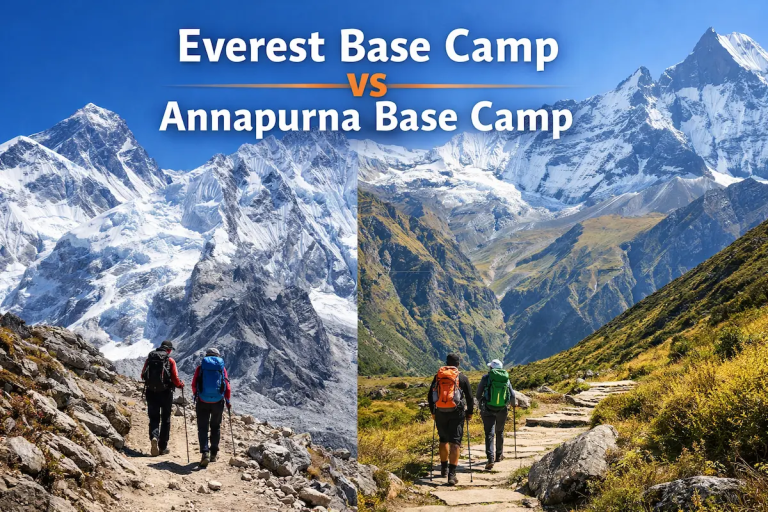
If you’re still deciding which route suits you, the comparison in Everest Base Camp vs Annapurna Base Camp: Which Trek Is Right for You? helps clarify how the two most popular options differ in altitude, difficulty, and overall experience.
Understanding what makes a trek beginner-friendly — and why some routes feel more comfortable than others — is the first step toward choosing a journey that feels both achievable and deeply rewarding.
What Makes a Trek Beginner-Friendly?
Not all Himalayan treks feel the same, even when the distances look similar on paper. The best trek in Nepal for beginners is shaped less by total kilometres and more by how altitude, daily walking time, infrastructure, and recovery opportunities are structured along the route. When these elements align, the experience feels steady and manageable rather than overwhelming.
1. Gradual altitude gain
Altitude is the single biggest factor influencing comfort and safety. Beginner-friendly routes either stay at moderate elevations or build height gradually with built-in acclimatisation days. This allows the body time to adapt to thinner air rather than being forced to adjust too quickly. Routes that gain elevation too fast can feel far more difficult, even for fit travellers.
For a deeper understanding of how elevation affects the body, see Altitude Sickness Explained Simply for First-Time Trekkers, which explains why pacing and acclimatisation matter more than fitness alone.
2. Moderate daily walking hours
A typical trekking day involves 4–6 hours of walking, broken into manageable sections with rest stops. Beginner-friendly routes avoid excessively long days and allow trekkers to arrive in the early afternoon, leaving time to rest, hydrate, and recover before temperatures drop.
This steady rhythm is a major reason first-time trekkers succeed. Walking slowly and consistently reduces fatigue and allows energy to build over the course of the trek rather than being depleted early.
3. Established tea house infrastructure
Nepal’s most accessible trekking routes are supported by tea houses that provide meals, shelter, and warmth each night. This removes the need for camping equipment and simplifies logistics for first-time trekkers. After a day on the trail, arriving at a warm lodge with hot food and a place to rest makes the experience far more comfortable and predictable.
4. Clear trails and navigation support
Beginner-friendly routes follow well-established trails used by guides, porters, and local communities. Suspension bridges, stone steps, and marked pathways create a structured walking environment. Trekkers are rarely navigating wilderness terrain; instead, they move through inhabited valleys and village networks.
5. Built-in recovery time
Treks that feel manageable include natural recovery periods — shorter walking days, acclimatisation hikes, and early arrivals that allow the body to rest. Recovery is not wasted time; it is what allows trekkers to continue feeling strong later in the journey.
This approach reflects the pacing philosophy explored in How to Plan a Himalayan Trek Without Rushing the Experience, where structured days reduce fatigue and improve overall comfort.
6. Support systems that reduce strain
Porters carry the bulk of luggage, allowing trekkers to walk with a light daypack containing essentials. This dramatically reduces fatigue and makes uphill sections far more manageable. Guides monitor pace, weather, and health, providing reassurance and practical support throughout the journey.
When these factors come together, trekking stops feeling intimidating and begins to feel structured, calm, and achievable. The mountains remain vast, but the daily experience becomes manageable — a steady progression of walking, resting, and adapting that allows beginners to move confidently through high-altitude landscapes.
Why Annapurna Base Camp Is the Best First Trek
For many first-time trekkers, the Annapurna Base Camp route offers the most balanced introduction to Himalayan trekking. It combines dramatic mountain scenery with manageable altitude, varied landscapes, and a comfortable trekking rhythm. For these reasons, it is often considered the best trek in Nepal for beginners who want a complete experience without the added strain of extreme elevation.
One of the most important advantages is the maximum altitude. Annapurna Base Camp sits at approximately 4,130 metres — high enough to feel like a true Himalayan environment, yet lower than many other iconic routes. Trekkers still need to move slowly and stay hydrated, but the physiological strain is generally less intense than at higher elevations. This allows beginners to focus on enjoying the journey rather than worrying constantly about altitude effects.
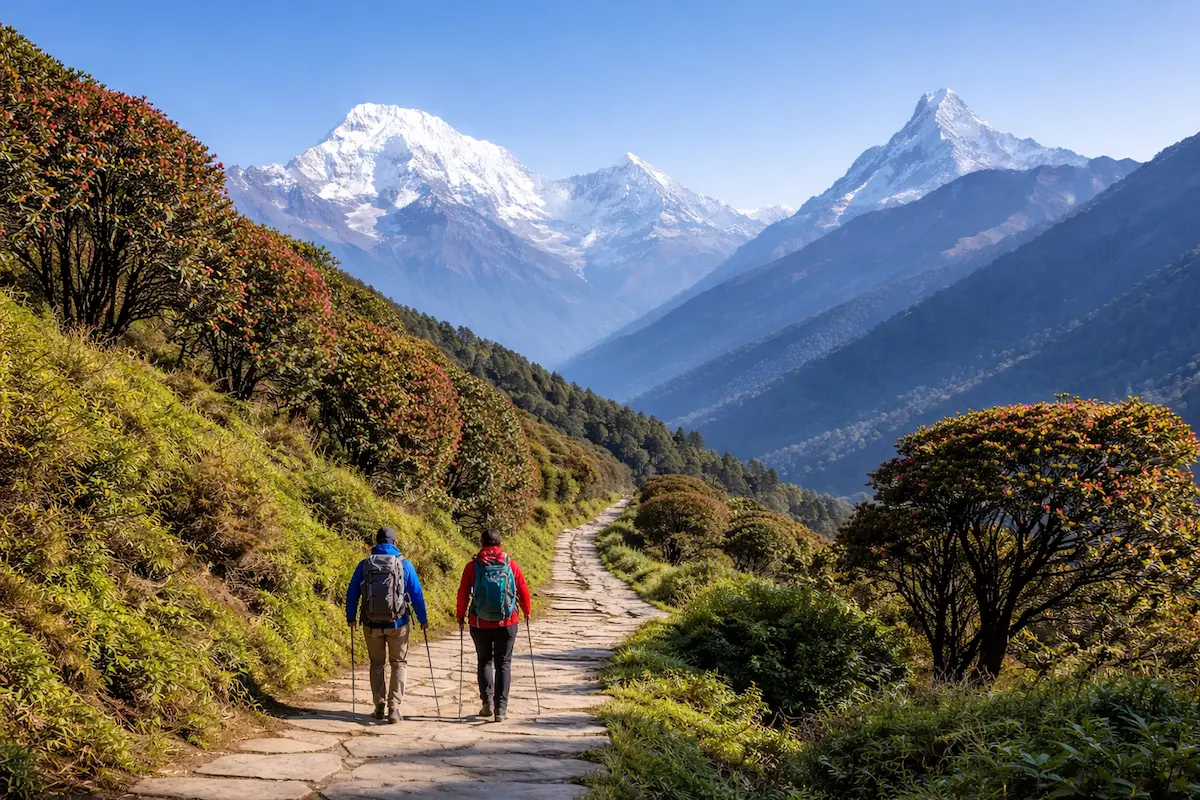
The landscape progression also helps maintain motivation and interest. The trek begins among terraced farmland and traditional villages before climbing through bamboo groves and rhododendron forests. In spring, these forests bloom with colour; in autumn, they offer crisp air and clear views. As the trail rises, the environment transitions into a glacial valley that opens dramatically into the Annapurna Sanctuary — a natural amphitheatre surrounded by towering peaks. This sense of progression keeps the journey engaging and provides a strong visual reward at each stage.
Daily walking distances are steady and manageable, typically 4–6 hours with regular rest stops. Stone steps and uphill sections require effort, but the rhythm of the trail allows beginners to settle into a sustainable pace. Arriving in the afternoon provides time to rest, hydrate, and enjoy the surroundings, reinforcing recovery and comfort.
Tea house infrastructure along the route is well developed, offering warm meals, comfortable lodging, and welcoming communal dining rooms. The atmosphere often feels relaxed and informal, shaped by Gurung and Magar villages where agriculture and mountain life remain central to daily routines.
Logistics also favour first-time trekkers. Access begins with a road journey from Pokhara, reducing the uncertainty associated with mountain flights. The overall trek duration — often 7 to 10 days — makes it easier to fit within typical travel schedules while still providing an immersive mountain experience.
Seasonal timing can further enhance comfort. For guidance on choosing conditions that suit your preferences, see When Is the Best Time to Trek in Nepal? (Month-by-Month Guide).
While no Himalayan trek is effortless, Annapurna Base Camp provides a structured and approachable experience that builds confidence day by day. Beginners often finish the journey not only with unforgettable memories, but with a deeper understanding of their own capability in mountain environments.
Can Everest Base Camp Be Your First Trek?
Although it is often viewed as a more demanding journey, Everest Base Camp is achievable for many first-time trekkers when approached with realistic expectations and a well-paced itinerary. While Annapurna Base Camp may feel more accessible overall, Everest Base Camp can still be the best trek in Nepal for beginners who are prepared to respect altitude, move slowly, and allow time for acclimatisation.
The primary challenge is elevation. Base camp sits at approximately 5,364 metres, and trekkers spend multiple days above 3,500 metres, where oxygen levels are significantly reduced. This does not make the trek dangerous when properly managed, but it does require patience. Walking becomes slower, breathing feels more deliberate, and conserving energy becomes essential. The itinerary is designed around acclimatisation days in key villages such as Namche Bazaar and Dingboche, allowing the body to adjust gradually to increasing altitude.
Unlike Annapurna’s varied terrain, the Everest route unfolds through a high-altitude valley shaped by glaciers and alpine ridgelines. The landscape becomes increasingly stark as vegetation thins and the terrain shifts to rock, ice, and wind-shaped slopes. This progression reinforces the sense of entering a true high-mountain environment and is part of what makes the journey so memorable.
Daily walking hours are comparable to other Himalayan treks — typically 4–7 hours — but the effort feels different due to elevation. Even moderate inclines can feel strenuous, and trekkers must accept a slower rhythm. Guides set a deliberate pace designed to protect acclimatisation and reduce fatigue. Moving slowly is not a limitation; it is the correct strategy for functioning comfortably at altitude.
Tea house infrastructure is well established, particularly in lower villages such as Phakding and Namche Bazaar. Lodges provide warm meals, shelter, and communal dining rooms that serve as social spaces each evening. As altitude increases, facilities become more basic, reinforcing the importance of arriving early, staying warm, and maintaining hydration.
Access to the trek begins with a flight to Lukla, a short mountain airstrip that serves as the gateway to the Khumbu region. Weather conditions can occasionally delay flights, so building flexibility into travel plans is important. For many trekkers, the flight itself becomes a memorable part of the journey.
Understanding how the body adapts to elevation is essential for first-time trekkers considering this route. For a clear explanation of symptoms, pacing, and acclimatisation, see Altitude Sickness Explained Simply for First-Time Trekkers.
Everest Base Camp is particularly well suited to beginners who are motivated by the symbolic significance of the Everest region and willing to embrace a slower pace. With proper preparation, steady habits, and respect for altitude, many first-time trekkers complete the journey successfully each season — often discovering that patience and consistency matter far more than strength or speed.
If You’re Nervous About Altitude or Fitness
It is completely normal to feel uncertain about altitude or physical ability before your first Himalayan trek. Many first-time trekkers assume they need exceptional fitness or mountaineering experience, when in reality the best trek in Nepal for beginners is designed around pacing, acclimatisation, and steady daily movement rather than athletic performance.
One of the most common concerns is altitude. As elevation increases, oxygen levels decrease, which can make breathing feel heavier during exertion. For a clear medical overview of altitude illness and prevention basics, the CDC’s high-altitude travel guidance is a helpful reference. This response is expected and manageable when trekkers move slowly and allow time for adaptation. Guides set a deliberate pace to support acclimatisation, and itineraries include rest or acclimatisation days where necessary. The key is patience — walking at a comfortable rhythm rather than pushing ahead.
For a clear explanation of what is normal at altitude and when to seek help, see Altitude Sickness Explained Simply for First-Time Trekkers, which explains symptoms and safe acclimatisation practices in simple terms.
Fitness worries are equally common, yet trekking success depends more on endurance than strength. If you can walk for several hours at a steady pace, you can usually complete a Himalayan trek. Training hikes, stair climbing, and regular walking in the weeks before departure can improve comfort, but extreme conditioning is not required.
Porter support significantly reduces physical strain. Trekkers carry only a light daypack containing water, a warm layer, and personal essentials, while porters transport heavier luggage. This allows beginners to conserve energy and move comfortably, even on steeper sections.
The trekking rhythm itself supports confidence. Days follow a predictable structure: wake early, walk slowly, rest regularly, arrive mid-afternoon, eat well, and sleep early. This routine reduces decision fatigue and helps the body recover each evening. As the days progress, many trekkers notice that movement feels smoother and breathing more stable.
Mental expectations matter as much as physical preparation. There will be cold mornings, tired legs, and moments of discomfort, but these are temporary and manageable. Accepting the rhythm of the trail — rather than expecting constant comfort — allows beginners to settle into the experience more easily.
For guidance on pacing and building a sustainable daily rhythm, see How to Plan a Himalayan Trek Without Rushing the Experience, which explains why slower progress often leads to greater comfort and success.
With realistic expectations and a steady approach, most first-time trekkers discover that altitude and fitness fears diminish quickly. Confidence grows with each day on the trail, and what once felt intimidating becomes a structured and achievable journey through one of the world’s most remarkable mountain landscapes.
Choosing Based on Time, Comfort & Confidence
Selecting your first Himalayan trek often comes down to practical realities as much as inspiration. Time available, comfort preferences, and personal confidence all shape whether a journey feels manageable and rewarding. The best trek in Nepal for beginners is not the most famous route, but the one that aligns with how you travel and what conditions help you feel steady and comfortable.
If you have limited time
Travellers working within a tight schedule often find Annapurna Base Camp easier to accommodate. The trek can typically be completed in 7–10 days, and access from Pokhara by road reduces the uncertainty of mountain flights. This makes planning more predictable while still delivering a true high-mountain experience.
If Everest has always been your dream
For those inspired by the symbolism of the Everest region, the Everest Base Camp trek can still be a first journey when approached with patience and proper acclimatisation. A longer itinerary allows the body to adapt gradually, and the steady pace set by guides helps maintain comfort at altitude.
If you want a clear side-by-side breakdown before deciding, see Everest Base Camp vs Annapurna Base Camp: Which Trek Is Right for You?.
If altitude makes you uneasy
Trekkers concerned about high elevation often feel more comfortable beginning with Annapurna Base Camp. The lower maximum altitude reduces physiological strain while still providing a powerful Himalayan setting.
If you prefer comfort and predictability
Both routes offer established tea house networks, but Annapurna’s access and varied terrain can feel more approachable for first-time trekkers. Everest’s higher elevation and flight logistics add a layer of complexity that some travellers prefer to experience after gaining confidence.
If you want a gradual confidence-building experience
Confidence grows quickly when daily walking feels manageable and recovery is consistent. Choosing a route that matches your comfort level helps transform initial uncertainty into steady progress and enjoyment.
If season and conditions matter to you
Weather and visibility can influence comfort, trail atmosphere, and daily walking conditions. For guidance on selecting the most suitable time of year, see When Is the Best Time to Trek in Nepal? (Month-by-Month Guide).
Ultimately, choosing your first trek is about aligning expectations with experience. When your timeframe, comfort preferences, and confidence level match the structure of the journey, the trail begins to feel less intimidating and far more rewarding.
Best Season for a First Nepal Trek
Seasonal timing plays a major role in how comfortable and enjoyable your first Himalayan journey feels. Weather influences visibility, trail conditions, temperature, and overall atmosphere on the route. Choosing the best trek in Nepal for beginners often means selecting a season that offers stable conditions and predictable walking days.
Autumn, from late September through November, is widely considered the most reliable trekking season. The monsoon rains have cleared dust from the air, producing exceptionally sharp mountain views. Days are typically dry and stable, while temperatures remain comfortable for walking. Trails are busier during peak weeks in October, but the clarity of the skies and consistent weather make this period especially appealing for first-time trekkers.
Spring, from March through April, provides a slightly warmer alternative. Rhododendron forests bloom across the hillsides, adding colour to the journey, and mornings often bring clear mountain views before clouds build later in the day. Temperatures feel milder at lower elevations, though nights at higher altitude remain cold. For many beginners, spring offers a comfortable balance between visibility and walking conditions.
Winter trekking, from December through February, offers quieter trails and crisp mountain views, particularly in stable weather periods. However, colder temperatures and potential snow at higher elevations require proper insulation and flexibility. Beginners who are comfortable with cold conditions may appreciate the solitude, but winter trekking demands careful preparation.
Monsoon season, from June through early September, brings rain, cloud cover, and muddy trails to most trekking regions. Visibility can be limited, and flight delays are more common. While certain rain-shadow areas remain viable, this season is generally less suitable for first-time trekkers seeking clear views and predictable conditions.
Shoulder periods such as late November or early March can provide a balance between favourable weather and thinner crowds. These transitional windows often deliver clear mornings, cooler temperatures, and a more relaxed trail atmosphere.
Weather conditions influence more than scenery; they affect comfort, daily rhythm, and recovery. Choosing a season that aligns with your tolerance for cold, crowd levels, and visibility preferences helps ensure a smoother experience. For a detailed month-by-month breakdown of trekking conditions, see When Is the Best Time to Trek in Nepal? (Month-by-Month Guide).
For first-time trekkers, stable weather and moderate temperatures support confidence, comfort, and steady progress — allowing the focus to remain on the experience rather than adapting to extreme conditions.
Conclusion: Choosing the Trek That Fits You
For first-time trekkers, the decision is less about choosing the most famous route and more about selecting the journey that aligns with comfort, time, and confidence. The best trek in Nepal for beginners is the one that allows you to move steadily, adapt to altitude, and enjoy the experience rather than endure it.
Annapurna Base Camp offers a balanced introduction, with moderate altitude, varied landscapes, and straightforward access. Everest Base Camp delivers a higher-altitude adventure shaped by iconic scenery and the cultural richness of the Khumbu region. Both routes are achievable for beginners when approached with patience, realistic expectations, and a well-paced itinerary.
Altitude, fitness concerns, and uncertainty are natural before a first trek, but they diminish quickly once you settle into the daily rhythm of walking, resting, and recovering. Confidence builds step by step, and what once felt intimidating becomes structured and manageable.
If you are ready to explore each journey in more detail, the Annapurna Base Camp Trek page outlines route structure, timing, and what to expect on the trail, while the Everest Base Camp Trek page explains acclimatisation pacing and daily progression through the Khumbu Valley. If you would like guidance choosing the right trek for your timeframe and comfort level, the contact page can help you plan a journey that fits your experience and goals.
The mountains do not demand perfection. They reward patience, steady movement, and respect for the environment. With the right preparation and expectations, your first Himalayan trek can be not only achievable, but deeply memorable — the beginning of a lifelong connection with mountain travel.
FAQ: Best Trek in Nepal for Beginners
1) What is the best trek in Nepal for beginners if I’m worried about altitude?
Annapurna Base Camp is often the safest-feeling first choice because it reaches a lower maximum altitude than Everest Base Camp while still delivering a true Himalayan experience.
2) Do I need to be very fit for my first trek in Nepal?
No. You need steady endurance, not extreme fitness. Most beginners succeed by walking slowly, taking breaks, and following a well-paced itinerary.
3) Is Everest Base Camp realistic as a first trek?
Yes, for many people — as long as you allow enough days for acclimatisation, keep your pace slow, and take altitude seriously.
4) What is the best season for a first-time trekker in Nepal?
Autumn (October–November) is usually the most stable for clear views and dry trails. Spring (March–April) is also excellent, with warmer temperatures and seasonal colour.
5) Should beginners trek with a guide in Nepal?
For a first trek, a guide is strongly recommended. They manage pacing and logistics, help monitor altitude symptoms, and reduce stress so you can focus on the experience.